
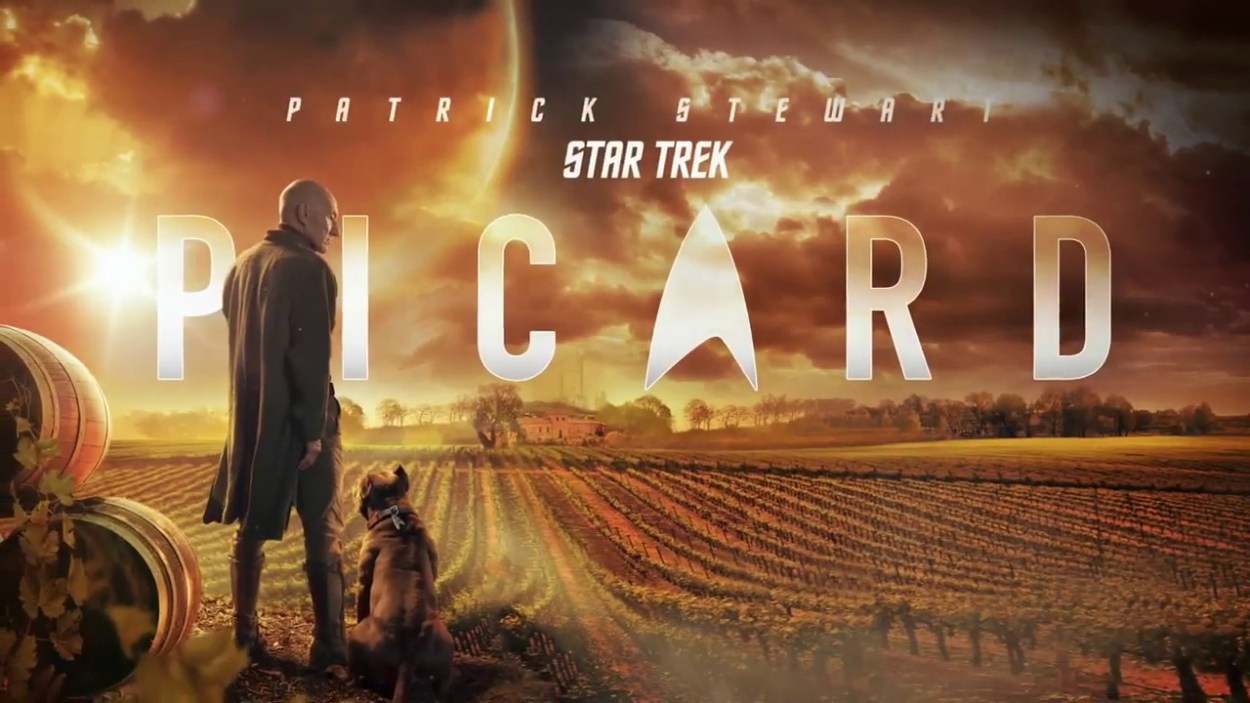
Survival is, surprisingly, a hot topic in philosophy, and no before you ask this doesn’t involve a coffee scented Bear Grylls in a polo neck jumper and beret. Essentially, the philosophical concept of ordinary survival is that as we age we survive our self of the previous day. We may grow, age and change our opinions and behaviours but we are essentially the same core person. There is a through line from us as babies or children to us on our death bed. However once we die we are no longer capable of ordinary survival, but, here comes the philosophy part, we do survive in other ways. Most obviously living things leave behind a genetic footprint in their offspring, the world’s bird population representing a kind of survival of the dinosaurs. Humanity has an additional means of survival, their impact, the narrative of their lives. Simply put Charles Dickens has died, yet in many ways he survives, philosophically we must determine what we consider his closest continuer, the means by which the truest form of Dickens has lingered. Is it in his descendants who share his hair colour, facial characteristics or predisposition towards certain talents or disease, or is it in his work? Every time a person watches an adaption of A Christmas Carol, every time someone wipes a tear from their eye reading Nancy’s death scene in Oliver Twist does this continued influence represent the survival of Charles Dickens at his finest? For Dickens himself one has to assume that the survival of his passion for highlighting social injustice and moving his readers would be his preferred closest continuer, the most powerful and representative reminder of his ‘true’ self. Why the philosophical mood? The new series Star Trek Picard is loaded with concepts of survival and closest continuers, the echoes of which are pertinent to both the story presented in Picard, the legacy of the Next Generation series and even the Star Trek franchise itself.

The teaser for the episode features Picard dreaming of his android crewmate Data, Picard is playing cards with Data, something that itself represented huge growth for Picard’s character. Poker games were often used in the Next Generation as an expression of the subtext of the episodes they appeared in, a take on the play within a play. The dream, Picard’s remembrance of his subordinate and friend, continues his relationship with Data, who died sacrificing his life for Picard, in the final Next Generation movie, Nemesis. It is of note that Data wears the Nemesis uniform but appears to Picard on the TV Enterprise (D), which was destroyed before the uniform came into use. The dream, which takes place in the Ten Forward bar location contradicts the usual venue for the poker games, Commander Riker’s quarters. These two discordances tell us that the dream is not a memory, but a unique narrative, it is a new conversation between Data and Picard. The interaction is a kind of survival for Data, who provides comfort to Picard, Picard does not want the dream to end. The events of the film First Contact show an almost telepathic link between Picard and Data enabled by the Borg hive mind that has connected their current captive Data to their previous one Picard, likely due to embedded Borg technology within Picard. Given Data’s dream persona is giving Picard clues relevant to the current story, could the scene be intimating that a part of Data is literally alive, buried somewhere in Picard’s mind? Ironically the link we saw in First Contact represents a kind of survival of Locutus, Picard’s Borg persona. In either interpretation Data has survived in some form within Picard the character, and (via Spiner, makeup and a bit of CGI wizardry) within Picard the series.
The internet loves a good list, and in most top ten lists of Star Trek: The Next Generation you will find the episode The Measure of a Man, in which Starfleet cybernetics expert Maddox wishes to forcibly transfer Data to his lab for examination and experimentation. The episode plays out as a legal drama with Riker as prosecution, arguing that as a machine Data is property and Picard acting as defence asserting that Data is a sentient being. The episode is a powerful one in which Star Trek as philosophical laboratory is best exemplified. Picard was, of course, successful, and Data gained Human rights. In another tear jerking episode a season later the same argument plays out with Data’s child Lal. When early Star Trek Picard trailers showed high energy martial arts fight scenes the easy conclusion was that Star Trek as ‘contemplative sci-fi’ was lost in favour of Star Trek’s answer to The Hunger Games or Alita (lets conveniently forget of course that the Original series episodes were rarely without a punch up). The first episode of Picard, Remembrance, quickly reveals key plot points that show that, whilst embracing the action and technical prowess of modern TV, this series is the closest continuer to episodes like Measure of a Man and the Offspring. Synths (synthetic life forms) have been banned following their devastating attack on Mars, Data appears to have twin daughters after a fashion, Maddox is name checked and missing and Starfleet has lost its way. Embracing the Next Generation’s best entries is an easy decision, however Picard also refuses to brush under the carpet some of Star Trek’s more controversial outings. The events of the underperforming Tom Hardy debut Nemesis? important, B4 is present and correct. The blink and you will miss it visit to the post Nemesis era via Spock’s mind meld in JJ Abrams Star Trek (2009) is critical to the story. Picard quickly establishes itself as the narrative closest continuer of at least 3 different iterations of Star Trek whilst being something unique.
The final scene of the Next Generation TV series All Good Things features Picard’s first poker game with the crew. The poker game follows a dream like adventure with Q in the past present of future, shades of Scrooge again. The episode All Good Things starts with a trip to his own personal future 25 years on from the end of Next Generation (coincidentally the time period we join Picard now), on his family vineyard. The opening scene of Picard? A dream of a poker game with Data, before waking in the future, now real, on his family vineyard. Picard begins where Next Generation ended, but reality and fantasy have switched places. The final scene of Nemesis is Picard smiling as the music Blue Skies plays, Blue skies being the song performed by Data at Riker and Troi’s wedding, and muttered by B4 signifying hope that Data’s memories and experiences had survived in B4, a type of survival for Data that may have been followed up in more detail had Nemesis spawned another film entry for the Next Generation crew. The opening space establishing shot of Picard is accompanied by the same music, Blue Skies. Finally, the Picard theme music features Picard’s Ressican flute, an instrument he learned during a lifetime he experienced in a matter of moments due to an alien probe in The Inner Light (another top ten list regular). The Inner Light itself being the story of a dead civilisation attempting to survive by implanting their culture into a trusted recipient, Captain Picard. Picard the series represents a literal continuation of both the TV and movie series simultaneously and in hints of dreamed lives and adventures it alludes to successful fantastical survival and the nature of reality.

Within the first episode the character Dahj is revealed to be a daughter of the late android Commander Data. Picard, with help from dream Data and one of Data’s old paintings, comes to the conclusion that Dahj is a synthetic life form. Dahj is a surprising combination of the means of survival described in the Dickens example above. She represents the ‘genetic’ survival of data’s DNA, using his technology, his programming. However she also represents the survival of his art, she looks like his painting, she has artificial memories, and whilst she does not dream of electric sheep, she certainly dreams of Picard, in a manner of speaking. That she is biological and synthetic, a human with android abilities blurs the arguments of episodes like Measure of a Man into even less comfortable territory. When do people lose their worth? What are the essential requirements to be considered human? What is reality? It’s interesting that the common put down levelled at fans of series such as Star Trek is “It’s not real” as if any Trekker, Whovian or prospective Jedi actually believe they were watching documentary footage. In fact the provable reality of the story is irrelevant, to return to Dickens, and in doing so give him a spark of life again, does the story of Scrooge’s haunting need historical evidence for the tale to teach us about being a good person? Fiction is an important medium for experiencing real emotions, for learning real lessons and gaining real knowledge or insight. Dahj exists as a reproductive survivor of Data, and also the survival of his, and others art. This added to Picard’s dreams of Data make the central theme of Remembrance survival. Picard himself confesses that he has stopped living that he is instead waiting to die. Ironic that in Dahj’s existence it appears that the dead android has survived with greater success than the living captain he sacrificed himself to save decades previously.
The episodes theme shares parallels with the Star Trek franchise itself. The Next Generation TV show ended in 1994, it survived in a lesser form in the movie series, which went out with a whimper with Nemesis in 2002. The TV golden age of Star Trek that began with the Next Generation and continued with Deep Space Nine, Voyager and Enterprise ended in 2005 amidst falling ratings and a series cut short. The entire ‘Prime’ timeline seemed dead and buried with the JJ Abrams reboot Star Trek 2009 in which the timeline that had lasted from 1966 to 2002 was replaced with the alternate ‘Kelvin’ universe. In 2017 the Prime timeline resurfaced, with a lick of paint, in the prequel Star Trek: Discovery. Discovery had a mixed reception not least because it featured some controversial design decisions including redesigned Klingons and a Starship that looked more futuristic than the 60s future designs it chronologically predated. Complaints about the superficial and perceived inconsistencies enabled fan gatekeepers to proclaim that Discovery was not “real” Star Trek, essentially denying TV Trek and the Prime Time Line’s survival after all. The critique about the Klingon makeup for example ignored that the Klingons and Starship Enterprise in 1966 looked markedly different from their counterparts in the 1979s Star Trek The Motion Picture. To return to the example of survival I proposed in the introduction it is like suggesting that Dickens has not survived in A Christmas Carol because there is a version (the best version) starring the muppets. In using story devices such as time travel, the mirror universe and war with the Klingons Discovery was actually a safe retread of much we’d seen before, albeit using modern story telling techniques, weaving cameras and lens flares. If anything Discovery, to me at least, represents the DNA of Star Trek passed on by procreation. Where Picard differs is that despite such a recognisable titular character this seems to represent a true departure from the formula, the intangible spirit as opposed to the DNA. Where DS9 broke the mould with a space station and ongoing arcs, and Voyager was about the journey home not the journey out however these innovations did little to truly upend the status quo. In Picard we have swapped the bridge of a starship for, a vineyard, Starfleet is no longer the protective organisation, it has lost its way, and the energetic captain is swapped for an octogenarian who struggles with the stairs. Its truly engaging (sorry I had to), and rare to see civilian life in the 24th century, no captain’s log, no uniforms, no “beam me up”. Picard the man is the closest continuer of the idealistic Starfleet we saw in The Next Generation whilst Picard the series is truly a test of the limits of Star Trek’s survival, exactly when does Star Trek stop being Star Trek? For Discovery doubters its when uniforms don’t match those of productions conceived before England won the world cup. For those who believe Star Trek’s hype, that it is about political and philosophical allegory used a lens for understanding today (and there is plenty of that), then it appears Star Trek has not only survived but, it hass roared back to its recognisable best to the sound of an old man’s flute. To paraphrase Data from The Offspring, it is the purpose of a reproduction to exceed its parent. It’s early days but based on episode 1 this may do just that.
 Film Thought