
Can You Hear Me? – Review & Thoughts
“If you’ve been affected by Graham’s story…”, said the sombre voiceover at the end of this week’s instalment of Doctor Who, the seventh episode of the current run – Can You Hear Me? It’s fair to say that this episode did affect me, ironically filling me with a deep sense of sadness at the current state of Doctor Who. And, if this episode has taught me anything (aside from never turn to the Doctor for comfort), it’s that it’s good to talk about this stuff and get it off my chest.
After a cold opening, the Doctor (Jodie Whittaker) drops the ‘fam’ off in present-day Sheffield, for a much-needed spot of R&R. Detecting a temporal disturbance in the TARDIS, the Doctor decides to investigate on her own. She traces the signal back to Aleppo, Syria in 1380, in a deserted hospital for the mentally ill. There she meets Tahira (Aruhan Galieva), the last survivor of an attack on the facility. She warns the Doctor it’s not safe – one of the creatures who attacked is still there. Looking up the Doctor sees a terrifying werewolf-like creature wedged between the walls at the ceiling; waiting to pounce. To their surprise, the creature doesn’t attack, but runs away. With a wave of her sonic the Doctor is shocked to find its given off no readings – the creature wasn’t real (we could all see that).

Ryan (Tosin Cole) pays a visit to his previously unmentioned best friend Tibo (Buom Tihngang), who seems distant and nervous. After reconnecting over a game of Fifa, Ryan goes to the kitchen to make his friend a cup of tea. He’s surprised however to see the usually tidy room a mess, with unwashed plates and bowls littering the work surfaces. His friend confides in him that he is troubled, plagued by recurring nightmares of a sinister figure who he’s also seen outside his flat. Ryan decides to sleep over to investigate further/try to win the world cup in Fifa.
Yaz (Mandip Gill) is paying her sister Sonya (Bhavnisha Parmar) a visit, back at their flat. Yaz has a secret of her own – she is marking an anniversary of sorts with her sister. Falling asleep in front of the telly (maybe Doctor Who was on?) Yaz has a troubling dream. Waking with a start, she sees a bald man (played by Ian Gelder, of Game of Thrones fame) with tattoos on his head, standing in her living room. Upon being noticed he disappears.

Meanwhile, back in Tibo’s flat, the same bald-headed man appears at Tibo’s bedside. Flexing his hand, its five fingers detach themselves and fly across the room like daggers, one of the fingers landing in Tibo’s ear (I suppose we should be grateful that he limited detaching parts of himself to the fingers). The fingers regrow on the man’s hand like detached starfish limbs. Hearing the noise from the other room, Ryan goes to investigate, startling the sinister figure, who disappears again in a puff of black smoke.

Meanwhile, Graham (Bradley Walsh) is catching up with the ‘lads’, playing a hand or two of Poker, when he experiences a psychic episode of his own. He sees two planets (at least I hope they were planets!) and has visions of a woman, who looks a bit like Storm from the X-Men, reaching out to him.
Back in Aleppo the Doctor ponders why the creatures took everybody from the hospital but left Tahira unharmed. Conference-calling her companions, the Doctor learns of the day’s developments back in Sheffield. She takes Tahira with her to pick up the ‘fam’ in the TARDIS. Plugging Graham into her ship’s telepathic circuits, the Doctor traces the image from his psychic message back to its source.
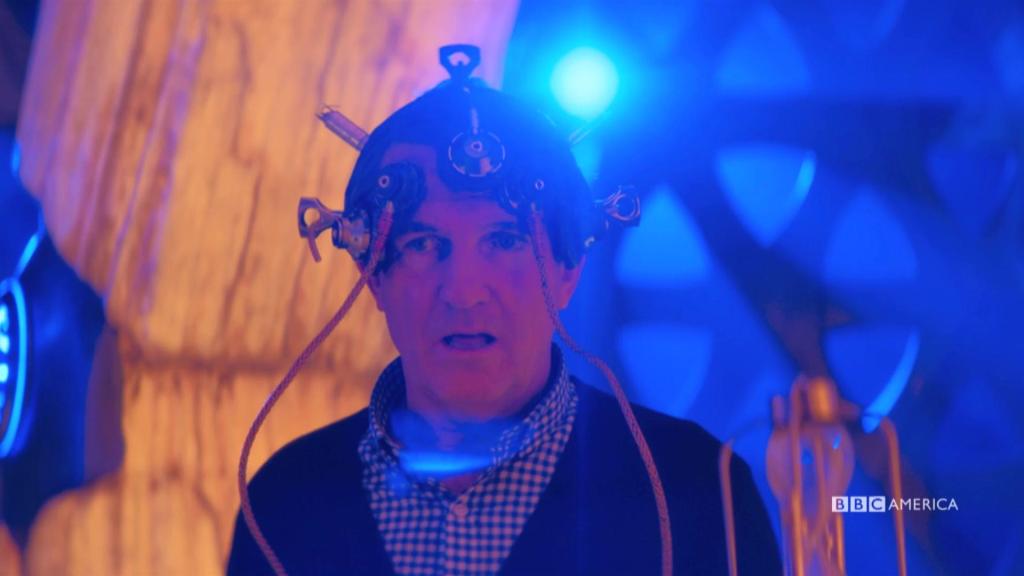
The TARDIS lands on a spaceship in geostationary orbit, that looks a bit like the Futuristic Zone from the Crystal Maze. Tahiti isn’t convinced though – she doesn’t believe its possible to travel beyond the stars. The Doctor is, “Basically the definition of impossible”, explains Yaz (fun fact – in my dictionary, the definition of “impossible” is “Hopelessly unsuitable, difficult or objectionable” – insert your own punchline).

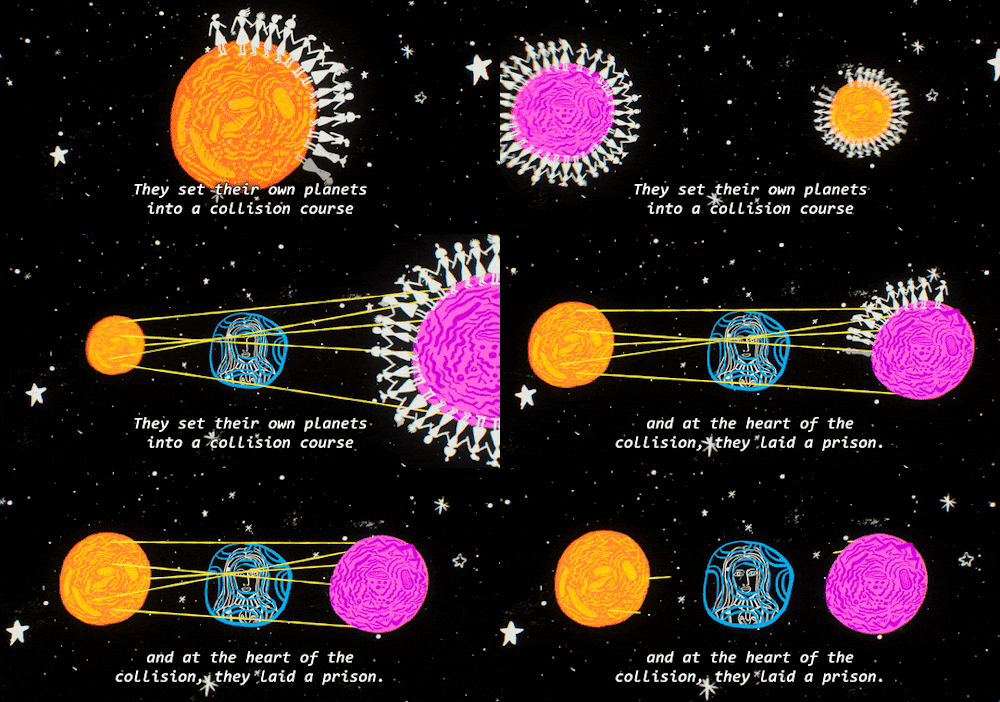
On a viewer screen they see the two planets (thank god – they were planets!) from Graham’s dream. The Doctor surmises they’re on a monitor platform observing the two planets’ collision; it’s an extinction event! There’s something between the planets though preventing the final collision from happening – a tiny “geo-orb”. Graham recognises it from his vision as the location where Storm the mysterious woman is being held. Yaz notices that part of the ship is covered in fingers. We are told they’re broadcasting a psychic signal to the girl in the orb, like a set of Amazon firesticks (digit-al TV?) streaming box sets. The Doctor deduces the platform is powering the orb, which is a prison-ship located between the two worlds.
Meanwhile, an exploring Tahira has discovered the kidnapped people from the hospital. They are handcuffed to machinery, unable to move. Behind a glass screen she also sees the monster from Aleppo, revealed to be the Chegaska, her worst fear made real by the creepy tattooed man from Ryan’s flat. The ‘fam’ arrive to rescue her just as the sinister man raises his ‘hand of fear’, its five deadly trigger fingers flying out towards their victims.

Trussed up like the others, ‘badfingers’ in their ears, the ‘fam’ begin to have nightmares. Yaz sees herself on a deserted highway in the middle of nowhere. Ryan has a vision of his friend Tibo, old and alone, surrounded by fire. Graham dreams his cancer has returned, and he’s being treated by his dead wife, Grace.
Back in the world of the waking, the Doctor is tinkering with the ship’s tech. She meets the bald-headed man who reveals himself to be Zellin, an immortal (closely related to the Guardians and the Eternals from classic Doctor Who). He’s a chatty-catty who reveals he’s like a reverse BFG (GFB – Grim Fingered Baddie) – he extracts nightmares from the ears of his victims. He takes the nightmares back and streams them to the woman trapped in the orb for entertainment. He has lured the Doctor to the platform in order to free the trapped prisoner – the Doctor has unwittingly helped him! Free at last, and materialising on the platform is Storm Rakaya, who has clearly been taking a class in animation during her time in prison, as she relays Zellin and her backstory through a Harry Potter-esque cartoon sequence.
Waking up, the Doctor is shackled like the others, a finger in her ear. The GFB and Rakaya meanwhile head to Earth. Rakaya has a taste for another box set, having binge watched the previous nightmares Zellin sent her, whilst residing at her Majesty’s pleasure.
Experiencing her own person nightmare, a sleeping Doctor sees the Timeless Child. Waking up she summons her sonic screwdriver out of her coat pocket, like a Jedi knight, unlocks herself and frees the others. The Doctor realises the Chegaska couldn’t harm Tahira because its a product of her imagination. The manifestation of her fears.

Back on Earth the GFB and Rakaya start to harvest nightmares from the sleeping humans. They suddenly hear a cry from the Chegaska, calling out all the way from the 14thCentury. Materialising back in Alleppo (which now I think about it, does look a bit like the Eastern Zone from the Crystal Maze), they are confronted by the Doctor. Tahira controls the Chegaska (“literally conquered her fear”, says Yaz in an incredible on-the-nose piece of scripting) to hold back the eternals. With the orb from the ship the Doctor sends the GFB and Rakaya back to the prison, saving the day.
Back on Earth, Ryan convinces Tibo to seek professional help for his depression. Yaz meanwhile recollects a day where she felt alone and suicidal. She was rescued by a policewoman who convinced her to go home, even betting her 50p that her life will be better in a years time, if she does. Yaz visits the policewoman in the present day and gives her the 50p ‘winnings’ (thankfully not a Brexit 50p).

Back in the TARDIS, Graham confides in the Doctor about his greatest fear – that his cancer will return. Despite the events of the episode, the Doctor doesn’t life a finger to help him. Ryan and Yaz meanwhile have a heart-to-heart if their own – pondering on the nature of their unique life with the Doctor and how long it can last. The Doctor rudely interrupts and asks them if they fancy another adventure.
Doctor Who has had a somewhat chequered past when it comes to depictions of mental health. Whether it’s Tegan’s possession by the Mara in 1982’s Kinda or Turlough’s troubling suicide attempt in 1983’s Enlightment, mental illness was often portrayed in a less than sympathetic light. Something to be ashamed of, even. In 2010 this changed for the better when the Doctor took a trip to 19th century France to visit Vincent Van Gogh in the last months of his life. Vincent’s debilitating depression is mistaken for madness by the Parisian locals but the Doctor understood the complexities of the issue. Vincent was being stalked by a literal and figurative invisible beast, apparent only to himself. Depression manifesting itself as a creature is a well-worn metaphor in popular culture, used to great effect in the Harry Potter series with Sirius Black (for more analysis on this, check out Chris Hammond’s excellent post about mental health themes in Harry Potter – https://filmthought.com/harry-potter-and-the-curse-of-depression/). In Can You Here Me?, Tahira’s depression takes the form of a malevolent beast which, although harmless to herself, attacks those around her, isolating Tahira from friends and loved ones. I’m not fully sure whether this is a totally satisfying analogy for the black dog of depression, as it’s my understanding it does hurt its creator as much, if not more than those it comes into contact with. However, as in Vincent and the Doctor, Can You Hear Me? commendably shows that depression isn’t something that can be easily fixed (well, certainly not was easy as its narrative).

Aside from Vincent and the Doctor, this episode is also reminiscent of 2011’s The God Complex. In that episode, the plot revolved around a prison ship which ensnares its prisoners so their worst nightmares could be fed to the creature trapped there. In Can You Here Me?, the GFB uses people’s worst fears to entertain a being trapped in a prison ship between two worlds. Sound familiar? In both stories the Doctor is also confronted by his/her worst fear. In the God Complex, the Eleventh Doctor’s biggest nightmare is the crack in time that’s been chasing him for a series and a half, whereas in Can You Hear Me? the Doctor has a nightmare about the Timeless Child. So if nothing else, we can surmise from both episodes that the thing which terrifies the Doctor most of all is a series arc. More sympathetic, I could not be.
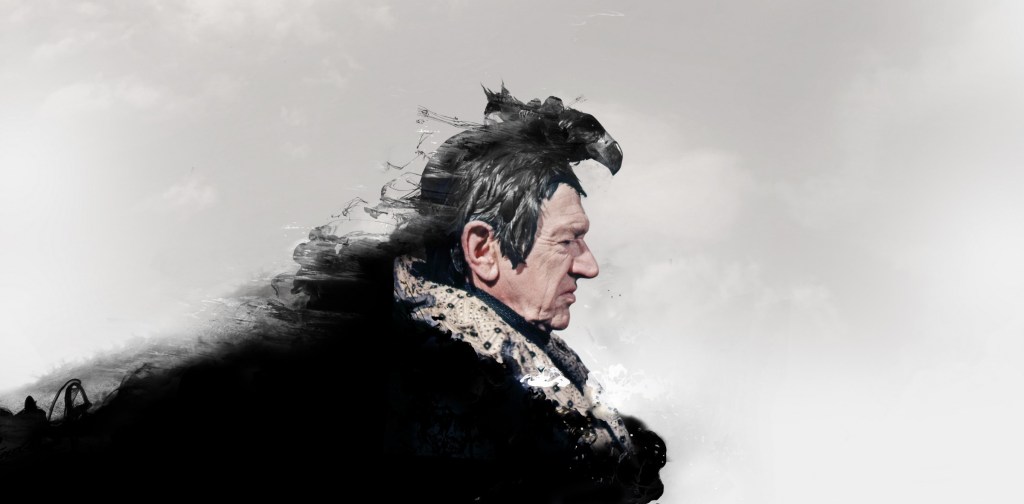
Let’s talk about the primary antagonist of the week, Zellin, a sort of cross between Ebony Maw from the Avengers films and a resident expert from the BBC’s Bargain Hunt. Like the Tim Wonnacott’s light-fingered younger brother (Tim Stoleacott). No wonder he chose 14th century Aleppo as his ‘hunting’ ground – he was probably on the lookout for an antique or two while he was there. The many tattoos on his head are a curious character detail. Presumably as a way of passing the boredom of eternity, Zellin decided to get himself ‘inked-up’. Maybe that’s why Valentine Dyall’s Black Guardian wore a bird on his head in the ’80s; covering up some embarrassing tattoos he acquired as a younger man. There’s only so much that the experts on TV’s “Tattoo Fixers” can rectify, I guess. At some point the artists are going to throw in the towel and say, “Fetch the crow hat.”
Ironic message of the week
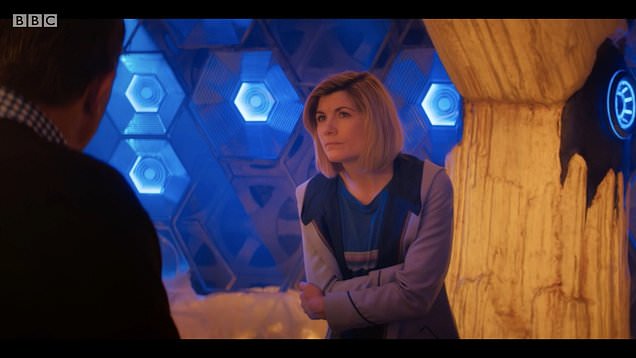
This week’s ironic message is that a 50-minute episode of television, all about discussing your problems to help your mental health, ends with a character getting shut down by the titular character, discussing his mental health problems. It’s hard to account for this final scene. It’s generated a little bit of controversy online with easily offended viewers (ironically the target demographic for this type of content) and whilst it doesn’t quite have me reaching for Ofcom’s phone number, it’s at least a very contradictory note to end the episode on. Even Matt Smith’s socially awkward Timelord was able to grasp the complexity of Vincent Van Gogh’s mental health and offer him kind words of comfort. Even a hug. Sure, the 12th Doctor wouldn’t have a clue what to do unless Clara had written him a queue card or two on the subject beforehand. The 13th Doctor however has appeared to be much more in touch with her feelings and yet she has no words of comfort to offer Graham, a man who is worried his cancer might come back. Lets not forget the Doctor has visited 51st century hospitals (2006’s New Earth) with the cure for every known disease – surely there’s comfort to be had there? Not necessarily curing Graham but at least saying there will be a cure one day. If nothing else, to not console him after the events of the episode feels like reverse character development.
Bonus Ironic Message of the Week
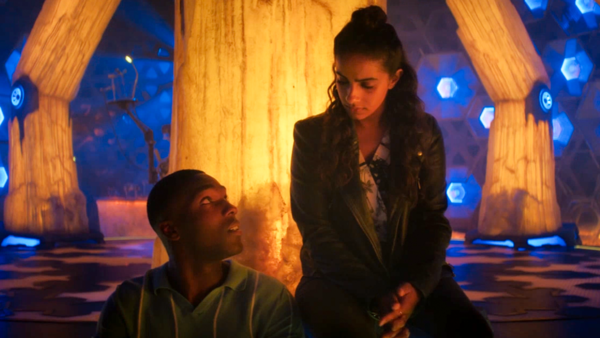
Yaz is judged to be doing the wrong thing running away from home, in the flashback, and yet she has run away with the Doctor in the present day. Also, ascribing the logic of Praxeus to this episode, if she’d have made it as far as Peru (and not just the M1 outside Sheffield) we’d have been applauding her. The moral of the story is basically that its okay to run away, so long as you run really, really far.

Right: Good running away (Praxeus)
The production values this week also seem to be lacking. The set designs in particular look artificial and jar awkwardly with the scenes filmed on location in Sheffield. The observation platform set looks particularly retro in design and wouldn’t look out of place in an 80s episode of Doctor Who. There are tinted glass panels with red piping, fibre-optic cables (which surely haven’t been used in Doctor Who since 1988’s Remembrance of the Daleks) and a glass plasma globe. It’s as if the recent Star Wars movies, designed as they are to tie into a 1970s science-fiction aesthetic, have subconsciously changed people’s perception of futurism. As Derrida would say, there is no future, only a retro-fueled regurgitation of the past.

The companion’s are better utilised in this episode, compared to previous weeks, and their character’s are explored a little deeper in this episode. Well, all apart from Ryan that is, who doesn’t appear to have a character. In particular, Mandip Gill got more to do this week as Yaz (she is criminally underused in the show) with her past being explored. The frustration of having so many companions though is that there is precious little screen time to devote to her backstory, with it being tacked on in the closing minutes. This episode could have benefitted from losing the character of Tahira and the pointless (if arresting) opening setting of Aleppo, in favour of focusing entirely on Yaz’s story. The monster could have been her own creation, given terrible life by the GBF. However, it does seem from the closing minutes of the show, that the ‘fam’ will be reduced in numbers next series, with Ryan confiding in Yaz that he feels bad staying away from his real life.
I think about it all the time
In an episode already laden with symbolism and subtext, the image of the two planets colliding could also tie into the overall series arc (look away Doctor!); the twin globes representing The Doctor’s world colliding with that of Doctor Ruth, the Timeless Child somehow sandwiched in the middle. Once again, this story is co-written with Chris Chibnall implying that it links into his wider plans for the season. Whatever its place in the grand scheme of things, this episode principally written by first time Doctor Who contributor Charlene James, is a light on scares again and features no body count, despite a lot of foreshadowing. This seems to be the trouble with this series in a nutshell – its all foreshadow and each episode feels quite inconsequential as, er, a consequence. With this amount of set up, the series finale in a fortnight’s time is going to have to deliver.

VERDICT
Finger of Drudge
Another lackluster episode that is preachy, simplistic and feels like a placeholder until the series finale. (Bad) fingers crossed for better in next week’s episode, where the Doctor meets Mary Shelley on the night she created Frankenstein.
5/10
 Film Thought