

In 1977 Star Wars changed cinema, hot on the heels of this success Star Trek revival series Star Trek Phase two was quickly repurposed as a motion picture, titled Star Trek: The Motion Picture. The antithesis of Star Wars The motion picture presented a slow, ponderous, philosophical tale. Essentially a remake of the original series episode The Changeling, the Enterprise faced off against a cloud, inhabited by a machine whose origins were a 20th century Voyager probe. The film was a success and plans for a second movie began to form. Recycling his idea of recycling his ideas Rodenberry’s pitch was a time travel entry that would be based on the original series episode The City on the Edge of Forever, a story which remains one of the franchise’s finest entries. The premise would be that time travelling Klingons, by way of the Guardian of Forever, would find their way to 1960s earth and prevent the assassination of Kennedy. Although this story was ultimately rejected by the studio it is an audacious plot to conceive of just 16 years after the event itself.
The key plot of the Star Trek proposal would provide an interesting early template for how similar stories would run in the future. 1. Prevent the assassination 2. Kennedy’s survival leads to terrible consequences 3. Kennedy becomes aware of his fate 4. Hero character/s has to allow the assassination to happen 5. The happier future is restored The response to this template could be that this is how all time travel stories work, however consider the following story possibilities. 1. Kennedy’s death is faked, he is saved but the world believes he was assassinated 2. Kennedy is given knowledge of the mistakes he made after his failed assassination in order to avoid making them 3. Kennedy is revealed to be a malign agent and his assassination is allowed to proceed This simple story structure is key to understanding why the Kennedy assassination has held such a fascination with science fiction writers and is such a visited point in history. It offers key insights into fictional time travel, and possible insights into the nature of time travel in the non-fiction world.
Given the similarities between The Changeling and The Motion Picture, it is reasonable to assume a similar congruence between The City On The Edge Of Forever and Rodenberry’s Star Trek 3 (To Rodenberry Star Trek was 1, The Motion Picture was 2 and the Kennedy story would be 3). In The City on the Edge of Forever McCoy accidentally travels to 1930s San Francisco where he saves soup kitchen volunteer Edith Keeler (played by Joan Collins). The butterfly effect of McCoy’s action was that Keeler, an advocate of peace, would successfully lobby the US government to delay entry into the Second World War thereby causing the Nazis to win the war and conquer the Earth, and in doing so prevent the creation of Starfleet and the Federation. Seeing the devastation following McCoy’s unknowing intervention Kirk and Spock travel into the past to undo what McCoy has done leading to Kirk actively preventing McCoy from saving Keeler from being hit by a car. The story is brutal, it is brutal because Keeler is killed by being run over. It is brutal because Kirk, who knows Keeler’s fate, and is romantically involved with her, is instrumental in distracting Keeler, causing her to be unaware of the car, and physically restrains McCoy who would save her, in essence Kirk is reframed as the cause of Keeler’s death. It is brutal because Keeler is kind and peace loving and yet these praiseworthy traits are, in the story, responsible for the victory of fascism and the ruin of the benevolent Federation.
From the City on the Edge of Forever and what little is known about the story pitched by Rodenberry we can surmise that the Klingons, using the Guardian of Forever to travel to Earth’s past, would unwittingly prevent the assassination of Kennedy. The Klingons are a traditional and conservative culture, and a Star Trek antagonist so it is unlikely that the Klingons would travel to Earth 1963 to save a liberal president, or that they could have determined the causal relationship between his assassination and the creation of their nemesis, the United Federation of Planets. We can further assume that the consequences of preventing Kennedy’s assassination would ultimately lead to the end of the Federation, or else where is the story? The disappearance of the Federation would require the intervention of the Enterprise crew to restore history. Once they have travelled to the past Susan Sackett explains in her book Inside Trek that Kirk “disliked Kennedy at first” before they “develop a mutual trust” this is much like the relationship between Kirk and Keeler without the romantic elements. The key difference between Kennedy and Keeler is that whilst Keeler is ignorant of her unfortunate place in history Kennedy is given a tour of the enterprise and has his fate revealed to him. Ultimately Kirk convinces a sceptical Kennedy to accept his fate and star trek resource Memory Alpha, even claims that Spock took a place on the grassy knoll to ensure history proceeded as planned. Again this echoes the paradox of City on the Edge of Forever, where it is the presence of Kirk that distracts Keeler enough for her to not notice the car that hits her. For both stories, if we believe the rumour, the Enterprise crew not only restore history, but take responsibility for creating it. Both stories rely on the death of a good person to ensure a wider historical victory, the needs of the many outweighing the needs of the one, to borrow from the eventual Star Trek sequel The Wrath of Khan.
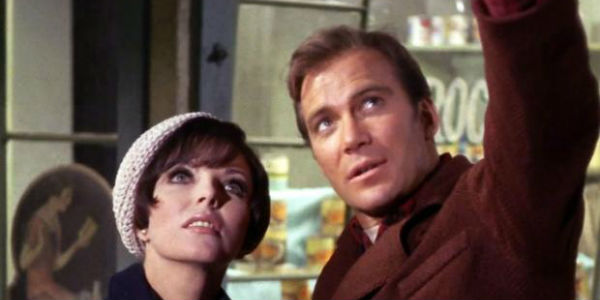
From what little is published on the script we can see 2 key differences between City on the Edge of Forever and the Kennedy script. The first difference is that the Enterprise crew would at some point be truthful with Kennedy about who they were and why they were there, the second is that Kennedy himself is given agency, becoming a willing participant in his own assassination. These are key differences that change the nature of the story, City on the Edge of Forever is a simple story, would a noble Starfleet captain willingly sacrifice an innocent to protect a known future. This is a perversion of the Hitler Paradox, itself a perversion of the Grandfather Paradox in which it is deemed impossible to kill your ancestor/Hitler because doing so removes you/your reason for travelling in time in the first place, creating a paradox. Rather than killing baby Adolf The City on the Edge of Forever’s moral choice is not to save someone, ultimately leading to Hitler’s defeat. A difficult choice for Kirk given his love for Keeler however Kirk is aware of the stakes, the rise of fascism is a huge motivation, as is the galactic consequences of the Federation no longer existing. And all of these stakes are personally known to Kirk, he has read and seen the history, he has a galactic perspective, and he is bred and trained to make decisions on a planetary scale. Not an easy choice for Kirk but an understandable outcome.
By contrast in the Kennedy script, the choice is given not to Kirk but to Kennedy himself. Instead of allowing someone to die, Kennedy must choose to allow himself to be killed, instead of balancing his life against a known future history Kennedy, an active participant in creating history, must choose, on faith, to accept that he will make things worse if he lives. Unlike Kirk, who sees the world on a galactic scale and makes his regretful decision from an almost godlike position of knowledge and power, Kennedy’s choice is one of humility, an admission of failure despite noble ideals, a self-sacrifice based on the word of another, and a visit to a starship. How devastating for Kennedy to be told he is worth more dead than alive, that his killing makes the world better on a galactic scale, that your untimely end makes life better for billions? This change makes Kennedy humble, noble, brave, selfless, heroic. Kennedy becomes not only the hero of the story, but because the assassination is a real event, it creates fictional context to a real event.
It is ironic that the first time travel story to visit Dallas in 1963 is itself an alternate history, a history we can only infer from second hand accounts. The City on the Edge of Forever, Star Trek IV: The Voyage Home and the Next Generation movie First Contact would seem to be parent, sibling and child to this script all of which help us to understand what the narrative structure would have been. However unlike each of these comparable stories whose historical figures are fictional, Kennedy is real and his assassination a national tragedy. It is Kennedy’s foreknowledge and acceptance of his fate that shift him from the victim of an assassination to a hero, willing to sacrifice himself for the promise of a better future. For the production and audience the film would have provided an opportunity to reframe one of America’s tragedies into a success on a galactic scale. A brave time travel story exploring the Hitler Paradox in all its complexity using a recent historical event as its anchor point, with Mr Spock taking part in the assassination its only logical that the Paramount executives chose not to pursue it.
 Film Thought